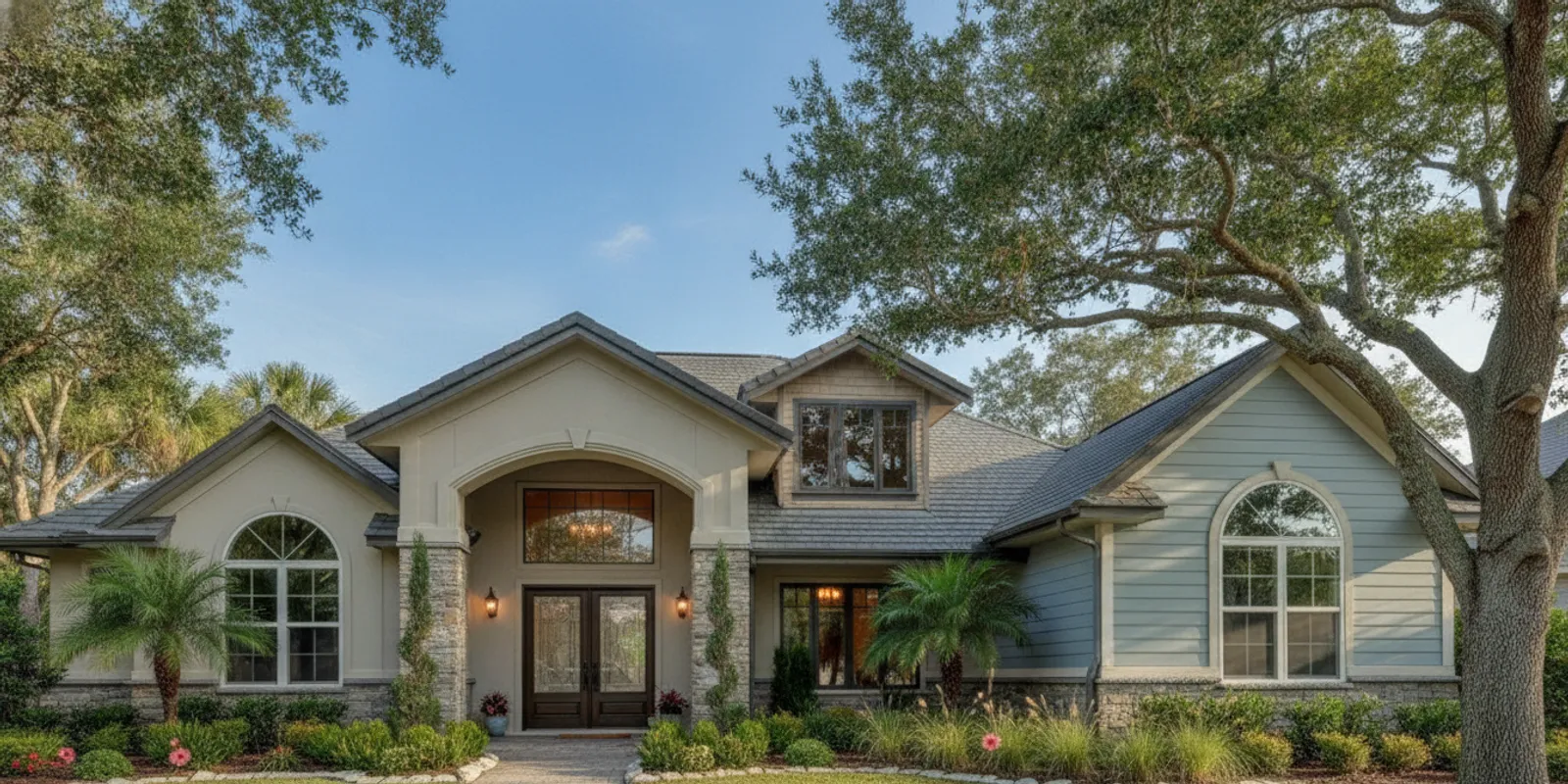
Choosing exterior double doors can change the way your entry looks and works every day. For Jacksonville-area homeowners, the right exterior double doors should suit the home while accounting for heat, humidity, wind-driven rain, exposure, and the opening itself. The complete system matters as much as the first impression.
Schedule a free in-home consultation
What should Jacksonville homeowners consider first?
Quick answer: Start with the entry’s purpose, available space, everyday traffic, weather exposure, and the balance of light and privacy you want. Then compare complete door systems—not just panels—including frame, hardware, glass, seals, threshold, finish, and installation. A professional consultation can assess the opening and help connect these choices to your home.
Double doors create a broad, balanced entry and can make it easier to move larger items through the doorway. They are not automatically right for every home. Porch depth, nearby walls, steps, furniture, and the door swing all affect whether the panels will work comfortably. Think about the approach from both sides: an entry that looks spacious from the street may have limited clearance inside.
Begin with how you expect to use the doors. Many systems have one active panel for regular entry and a second panel that can be opened when a wider opening is useful. If you regularly bring in large furniture, host gatherings, or want a more open-feeling entry, ask how the specific system operates. If the second panel will rarely be used, its latches and routine maintenance still deserve consideration.
- Daily movement: Identify the panel you will use most and check whether the handle is convenient for household members.
- Clearance: Consider the swing path, porch furniture, steps, interior rugs, and nearby walls.
- Weather: Note whether the entry is sheltered or exposed to rain and wind.
- Privacy and daylight: Decide whether you prefer clear glass, decorative glazing, or a more private option.
- Appearance: Look at the home’s trim, exterior colors, and architectural style so the new entry feels considered rather than added on.
Homeowners comparing entry styles can also explore Koehler’s information about doors and door services, French doors, and double French doors. The best comparison is based on the opening and how you use it, not appearance alone.
Section takeaway: First decide what the doorway needs to do: provide a comfortable everyday route, create occasional wider access, admit light, or strengthen the home’s visual balance. That purpose gives you a practical basis for comparing products and avoids selecting a system based only on a showroom look.
Which materials, glass, and hardware should you compare?
There is no single best material or glazing choice for every entry. Compare product specifications, upkeep expectations, available designs, and suitability for the actual opening. Ask what is included in the proposed system and how its manufacturer describes the intended use.
| Item to compare | Questions to ask | Why it matters |
|---|---|---|
| Door material and finish | What care is recommended? Which finishes and styles are available? | Helps align appearance and maintenance with your household. |
| Glass configuration | What glazing, privacy, and decorative choices are available? | Balances daylight, visibility, and the entry’s look. |
| Product documentation | What approvals or performance documents apply to this exact configuration? | Lets you review whether the selected system is intended for the project conditions. |
| Frame, threshold, and seals | How are these components specified and integrated during installation? | Connected details contribute to operation and weather management. |
| Hardware and latching | How does the inactive panel secure? What lock and handle options are offered? | Clarifies everyday use and how both panels are secured. |
| Installation scope | What preparation, trim work, removal, and cleanup are included? | Makes it easier to understand the full proposed work. |
Glass does not have to mean a fully transparent panel. Ask about decorative patterns, privacy levels, and available glass areas. If the entry faces a walkway or a nearby home, privacy may matter as much as daylight. If you want a brighter foyer, discuss how much glass is available in the product while considering the view from outside and inside.
Hardware deserves a hands-on discussion. Ask to see how the active panel latches and how the inactive panel is secured at the top and bottom, if applicable to the system. Confirm whether the handle and lock options suit the way your household enters. A homeowner who expects to use both panels periodically should understand how to release and re-secure the inactive one, rather than learning only after installation.
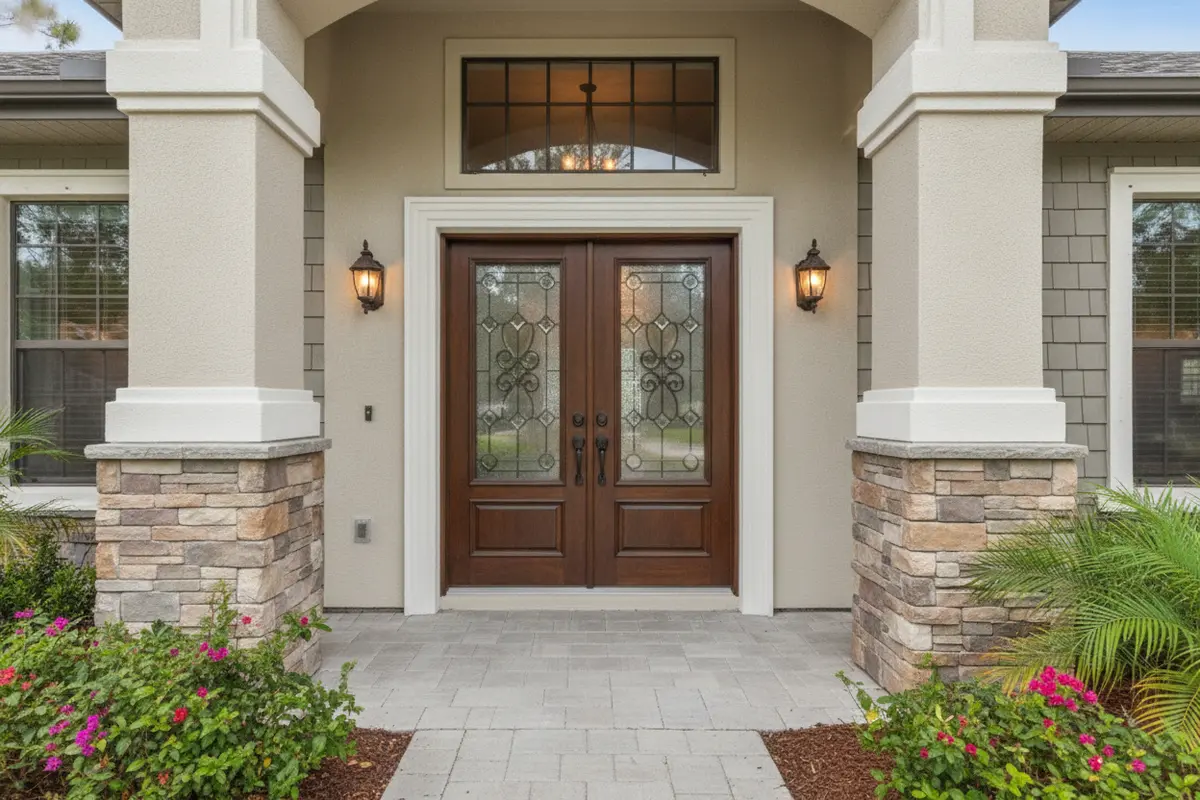
Weather suitability is not something to infer from a product’s general label. Ask the contractor to identify the documentation and approvals for the proposed door configuration and explain how the frame, threshold, seals, and installation address the actual opening. The Florida Building Commission provides government information about Florida building codes; your project professional can explain which requirements apply to your specific work.
Consider how the finish will look beside existing trim and exterior materials. Bring a photograph of the entry and note whether you plan to keep or change nearby finishes. If the new doors will sit beside existing sidelights or transoms, ask how the proposed system will relate visually and whether those elements are part of the scope. Small details such as hardware color and glass pattern can make a large opening feel cohesive.
Section takeaway: Compare the door, frame, glass, finish, latching, and documentation as one system. Ask for product-specific answers and clarify which components are included, rather than assuming that two products with a similar appearance perform or install the same way.
How can you prepare for a professional assessment?
Homeowners do not need to determine the final door size themselves. Instead, record what you observe and have the opening assessed professionally. Mention if the existing doors stick, feel drafty, show water staining, or no longer suit how you use the entry. These details help focus the conversation without turning your preparation into a do-it-yourself measurement project.
Before an appointment, make a short project brief. It can be as simple as a note on your phone, but it should explain what you hope to improve and what constraints you already know about.
- Write down your top priorities, such as appearance, light, privacy, easier access, or weather protection.
- Take clear photos of the entry from indoors and outdoors, including nearby walls, steps, trim, and porch features.
- Note the current door swing and anything that might obstruct it, such as furniture or a narrow walkway.
- Decide whether you want more glass, more privacy, or a middle ground.
- List any trouble operating the current system or signs of water entry that you have noticed.
- Gather questions about product approvals, installation scope, disposal, finish care, and warranty coverage.
Photos are helpful context, but they do not replace an in-person assessment. The professional can evaluate the opening, discuss the options, and explain the proposed work. Ask whether the written proposal covers both panels, frame, hardware, necessary preparation, installation, and cleanup, as applicable. If the opening needs additional work, ask what that work involves and how it affects the plan before agreeing to proceed.
It can also help to think through a typical day. Which door will family members use most? Do you need a clear route for carrying groceries? Would an inward swing conflict with a console table or rug? Is there enough room outside for the panels to open without hitting a railing or furniture? These are not measurements; they are practical observations that let the consultant discuss operation in the context of your home.
Learn more about Koehler Home Improvement and its local approach. Koehler is family-owned, has served the Jacksonville area since 2003, and Toby Newton personally reviews proposals. The company provides a written proposal so homeowners can understand the recommended work before making a decision.
Section takeaway: Bring priorities, photos, and observations—not your own final measurements. A clear description of how the entry looks and functions today helps a professional assess the opening and recommend options that fit your goals.
What should you review in the proposal and installation plan?
The installation plan is part of the product decision. Ask how the opening will be evaluated, how nearby finishes will be protected, and what steps are included to fit and finish the system. You should understand who will perform the work and whom to contact if questions come up during the project.
Use the proposal review to confirm the details that are easy to overlook when attention is focused on the door style. Ask for plain-language explanations and written scope where possible.
- What exact door system, panel arrangement, and finish does the proposal describe?
- Which product documentation or Florida approvals apply to that configuration?
- What work is included around the frame, trim, threshold, and weather seals?
- How will the home be protected during removal and installation, and what happens to the old door?
- What warranty information applies to the product and workmanship?
- What should you expect on installation day, and how will the completed work be reviewed?
- Who should you contact if a question arises after the installation?
Compare proposals by matching scope, not just by comparing a product name or a brief description. One proposal may include trim or additional preparation that another does not mention. If something is unclear, ask before making a decision. A detailed written proposal gives you a practical way to compare the recommended work with your priorities without relying on assumptions.
Ask what happens if the assessment identifies a condition that changes the plan. The goal is not to anticipate every possible issue from a photograph; it is to understand how changes will be explained and documented before work proceeds. Also confirm what is expected of you on installation day, such as clearing the entry area or moving nearby items.
For additional context, Koehler’s pages about sliding door installation, fiberglass entry doors, and door expansion and installation services cover related door considerations. These are different project types, but reviewing them can help you frame questions about operation, materials, and the opening.
For Jacksonville and nearby Northeast Florida homes, weather exposure and applicable building requirements should be part of the discussion. Do not assume a general product description answers whether a particular configuration is right for your opening. Ask the contractor to explain the specifications and how the proposed installation addresses your project conditions.
Section takeaway: A useful proposal identifies the system, scope, documentation, and installation expectations. Review those details alongside the appearance and operation you want, and ask for clarification in writing before you commit.
Frequently asked questions
Are exterior double doors practical for a Jacksonville home?
They can work well when the entry has room for the panels to operate and the homeowner wants a wider opening or a balanced facade. The porch layout, opening, exposure, and product specifications should be assessed before choosing.
Do both panels open?
Many systems have an active panel for everyday use and an inactive panel that can be released when a wider opening is useful. Ask how the inactive panel is secured and what operation is available in the specific product.
Should I measure the opening before requesting a quote?
No. You can share photos and describe what you have noticed, but leave measuring and final sizing to the professional assessment. This keeps recommendations grounded in the actual opening and project conditions.
What should I bring to a door consultation?
Bring photos, a description of your goals, and questions about glass, privacy, hardware, product approvals, installation, and warranty. Mention any difficulty operating the current system or signs of water entry you have observed.
Can I ask about financing?
Yes. Koehler Homes offers financing through GreenSky. Ask during your consultation for current program details and terms; do not assume a payment or eligibility without reviewing the available information.
Exterior double doors are a long-term choice, so give equal attention to appearance, operation, product details, and installation. Koehler Home Improvement is a family-owned Jacksonville-area company serving Northeast Florida and Southeast Georgia; a free consultation can help you discuss your entry and receive a written proposal.