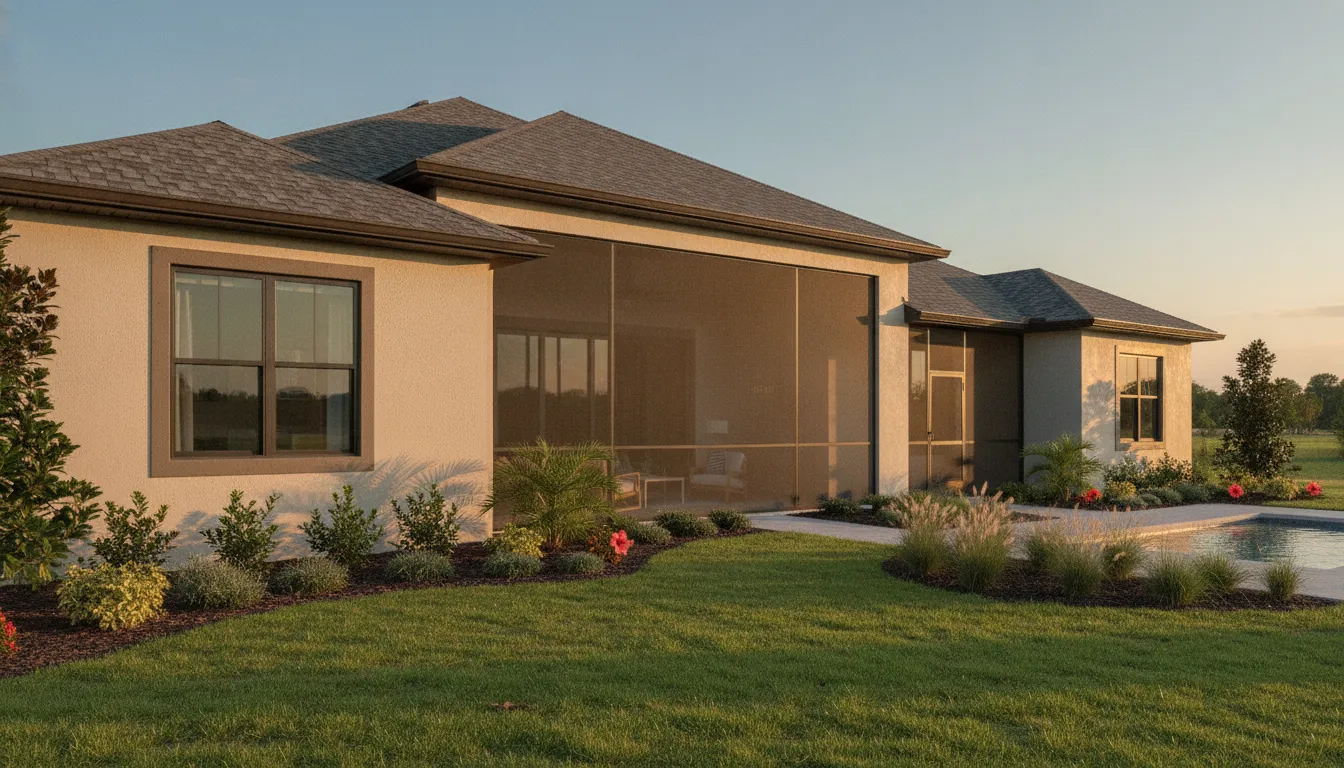
Choosing a sliding door for a Northeast Florida home involves more than deciding how much daylight or patio access you want. Heat, humidity, salt air, hurricane winds, wind-driven rain, and local approval requirements all affect the right product and installation plan. A well-matched system should support comfortable daily use while fitting the opening, exposure, and protection needs of your home.
Get a free in-home consultation
That evaluation starts with the practical benefits of a wide glass opening, from patio connection and natural light to ventilation and outdoor views. It also helps clarify which features matter most before comparing configurations, materials, and protection options.
Why choose exterior sliding glass doors for a Florida home?
Exterior sliding glass doors can make the transition between a conditioned living space and a patio, lanai, balcony, or terrace feel more natural. Their panels move along a track rather than swinging into the room, which can preserve usable floor space while bringing in daylight and outdoor views.
For Florida homeowners, the best choice balances everyday comfort with the home’s exposure to heat, humidity, salt air, and severe weather. That makes the opening, the door system, and the installation details equally important.
Answer capsule: Exterior sliding glass doors suit Florida homes because they connect living areas with patios, lanais, balconies, and terraces while conserving floor space. Large multi-panel arrangements can add daylight, views, and ventilation. Homeowners should still match the system to local weather exposure and verify product-specific performance before choosing.
More daylight and easier outdoor access
A sliding system can be useful where a hinged door would interfere with furniture, walkways, or a narrow room layout. Multi-panel configurations may span a larger opening, creating a broader connection to an outdoor living area. That can be especially helpful for rooms that open onto a covered patio or lanai.
Homeowners commonly weigh several practical benefits:
- Convenient access to patios and outdoor entertaining areas
- Natural light and clearer views beyond the room
- Smooth operation without a swing path inside or outside
- Potential energy-efficiency, security, and durability considerations
A Florida-focused exterior opening
A door that looks right in a showroom still needs to make sense for its location. Coastal homes may face salt air and stronger weather exposure, while every Florida home must account for heat, humidity, and applicable wind-borne debris requirements. Impact-rated sliding doors may be available with features such as heavy-duty tracks, multi-point locking systems, or laminated glass, but those characteristics are not universal. Confirm the specific product documentation, rating, and installation requirements.
For a broader look at materials, protection, and installation considerations, review these Florida exterior door options before comparing systems for your opening.
How do sliding glass doors exterior options fit Florida homes?
Florida homes need exterior doors selected for more than appearance. Heat, humidity, salt air, hurricane winds, and wind-borne debris rules can all affect which sliding glass door system makes sense for a particular opening. The right choice balances daily comfort and access with product documentation, installation requirements, and the home’s exposure.
Answer: Sliding glass doors exterior options can suit Florida patios, lanais, and other outdoor connections when the configuration, materials, glass performance, and installation are matched to the home. Homeowners should compare opening size, ventilation, energy measures, and product-specific storm ratings instead of assuming every sliding door offers the same protection.
Choose the configuration for the opening
Conventional sliding doors work well where a homeowner wants broad outdoor views and a practical path to a patio or lanai without requiring the swing space of a hinged door. A standard two-panel arrangement may fit a typical replacement opening, while larger multi-panel systems can span a wider opening and create a more expansive connection to the outdoors.
Panel direction, fixed and operating sections, track layout, and available wall space all matter. Review multi-slide door configurations when the design calls for a larger opening, but make the final choice from measured site conditions rather than a photo or showroom display.
Match performance to Florida conditions
Impact-rated sliding doors are one available product category, and some systems use heavy-duty tracks, multi-point locks, or laminated glass designed to resist wind-borne debris. Those features are product-specific. Not every sliding door is impact-rated, so verify the exact Florida Product Approval, design pressure, and installation requirements for the selected system.
Energy performance deserves the same careful review. The U-factor indicates how well a door limits heat flow, while the solar heat gain coefficient, or SHGC, describes how much solar radiation enters through the glazing. Lower or higher values are not automatically best in every situation. Compare the rated performance with the home’s orientation, shade, glass package, and cooling needs. A written evaluation can help connect those numbers to a practical recommendation. Related Florida exterior door options provide additional context for climate and product selection.
What should Florida homeowners check for storm protection?
Storm protection starts with matching the door system to the home’s location, exposure, opening size, and installation conditions. A coastal Jacksonville home may face different wind, salt-air, and wind-borne debris considerations than a home farther inland. Ask for product-specific documentation and discuss the complete installation, not just the glass.
Answer: Florida homeowners should verify the door’s applicable wind-load and debris-resistance information, Florida Product Approval documentation, design pressure, and installation requirements. Impact-rated or laminated-glass systems may be appropriate for some openings, but ratings vary by product. Proper anchoring, support, sealing, permits, and inspection also matter.
Florida code resources address wind loads and hurricane-generated debris loads for exterior glazing. In some Florida jurisdictions, code provisions also require Product Approval for exterior glazing. Review the Florida Building Code guidance for exterior glazing with a qualified professional, because the applicable requirements depend on the property’s location and project details.
A practical storm-readiness checklist
- Identify the exposure. Consider the home’s location, elevation, proximity to open water, surrounding buildings, and likely wind-borne debris exposure. These conditions can affect the design pressure selected for the opening.
- Request the exact approval information. Confirm the specific sliding door model’s Florida Product Approval or other applicable approval documentation. Do not assume that an approval for one size, configuration, or installation condition applies to every door.
- Verify design pressure. Ask how the product’s design pressure relates to the building height, opening size, and exposure. The right value is product- and site-specific, not a universal rating for all exterior sliding glass doors.
- Clarify the glass and frame system. Some impact systems use laminated glass designed to resist wind-borne debris, while other doors may not carry the same rating. Confirm the complete tested or approved assembly, including frame, locks, and tracks.
- Review installation and documentation. Ask about anchoring, shimming and support, continuous sealing, water management, required permits, inspection, and the documents you will receive after installation.
These checks do not guarantee that a home will avoid storm damage. They help homeowners compare door systems responsibly and identify questions before selecting a product or approving an installation plan.
How do glass and frame choices affect comfort?
Glass and frame decisions shape more than the appearance of an exterior opening. They influence how much daylight enters the room, how clearly you connect with the patio, and how the door feels during daily use. A well-matched system can support a comfortable indoor environment while preserving the open, bright character homeowners want from sliding glass doors.
Answer capsule: Glass affects daylight, outdoor views, solar heat, and the amount of work your cooling system must do. Frame design supports smooth operation, durability, and weather resistance. For Northeast Florida homes, compare these characteristics with the opening, exposure, and installation requirements rather than choosing by appearance alone.
The U.S. Department of Energy explains that fenestration energy performance varies by climate and recommends considering the installation climate before selecting products. Two useful measures are U-factor, which relates to heat transfer, and solar heat gain coefficient, or SHGC, which relates to how much solar heat enters through the product. Review the DOE energy guidance for residential windows and doors when comparing specifications.
- Daylight and views: Larger glass areas can make a room feel more connected to the outdoors, while the glass selection should suit the home’s sun exposure.
- Cooling comfort: Glass products add to a building’s heating and cooling loads. Energy-efficient selection and installation can help minimize those added space-conditioning loads.
- Everyday operation: The frame, track, rollers, locks, and support details all contribute to smooth, secure operation over time.
Frames also need to work with the home’s conditions. Heat, humidity, and coastal salt air can make material durability and maintenance important considerations. The right choice depends on the existing opening, orientation, ventilation goals, and the specific product documentation, not a universal promise about one glass or frame type.
For related guidance, review Koehler’s energy-efficient window and door guidance. Homeowners near the coast can also explore coastal patio door replacement considerations before arranging an evaluation.
Which installation details help keep an exterior door reliable?
Reliable performance depends on more than choosing a well-built door. The opening, attachment points, drainage path, and seal must work together. In Florida, that matters because wind-driven rain can reach sliding-door systems and, if water enters the assembly or surrounding wall, contribute to interior damage or property loss. Installation should be planned for the specific home, product, and exposure.
Answer capsule: A dependable exterior door installation uses the correct anchors, consistent shimming and support, continuous sealing, and deliberate water management. The project should also account for the door’s approved installation requirements, applicable permits, and inspection. These details help manage wind-driven rain and movement without promising that any system will be leak-proof.
During an evaluation, homeowners should ask how the installer will address the following:
- Anchoring: Confirm that fasteners and attachment points match the product requirements and the conditions of the opening. For a door exposed to stronger winds, the design pressure and approved installation details deserve particular attention.
- Shimming and support: The frame needs consistent support and alignment so the panels can operate as intended. Shims should not be treated as an afterthought, especially when an existing opening is uneven or requires preparation.
- Continuous sealing: Sealing should be planned around the full frame and transitions, rather than applied only where a visible gap appears. The exact materials and sequence should follow the door manufacturer’s requirements.
- Water management: The installation should direct water away from the opening and preserve the intended drainage path. This is especially important where wind-driven rain may test the sill, corners, and adjacent wall area.
- Permits and inspection: Verify whether the project requires a permit and inspection in the local jurisdiction. Product documentation, Florida-specific approvals, and inspection requirements should be reviewed before work begins.
These checks are part of the broader Florida exterior door options conversation. A careful site evaluation can identify conditions that are not apparent from measurements alone and help align the selected door with the home’s exposure and installation requirements.
How does a Koehler sliding-door consultation work?
A Koehler consultation gives you a practical way to evaluate your home’s opening, understand suitable product options, and plan the work without a high-pressure sales approach. The process begins in the home, where measurements and site conditions shape the recommendations rather than a one-size-fits-all package.
Answer: Koehler’s process combines an in-home measurement and site evaluation with personalized sliding-door recommendations, a detailed written proposal, managed installation, and a final walkthrough. The walkthrough covers door operation and maintenance, while warranty documentation helps you keep important project information available after installation.
Start with the opening and your priorities
During the consultation, the team evaluates the existing opening and discusses what matters most to your household, including daylight, outdoor access, smooth operation, comfort, security, or weather exposure. Recommendations can then be matched to the home’s conditions and the products being considered. The result is a clearer decision, not a rushed commitment.
Review a written plan before work begins
After the in-home evaluation, you receive a detailed written proposal describing the planned scope. This gives you an opportunity to review the recommended products, installation approach, and project expectations before authorizing the work. Koehler serves Jacksonville and Northeast Florida as a family-owned company, with local accountability dating to 2003.
Finish with installation guidance and documentation
Once the project moves forward, the installation is managed around the agreed scope. At completion, the final walkthrough demonstrates how the sliding door operates and how to care for it. You also receive warranty documentation for your records. For more background on the company and its leadership, visit Koehler’s local background, including Florida Certified Building Contractor license CBC056153 held by Toby Newton.
When should you compare sliding doors with other patio-door styles?
Sliding doors are often a practical fit when you want broad outdoor views, convenient patio access, and a door that moves along its track rather than swinging into the room. Compare other styles when the opening, traffic pattern, ventilation goals, or architectural character point in a different direction. The right choice depends on how your household uses the space, not on a universal winner.
Answer capsule: Compare sliding doors with French or other patio-door styles when you need to balance clear opening width, available floor space, ventilation, security, and visual character. Sliding systems suit spaces where a door panel should move beside a fixed panel. Hinged options may suit rooms where a wider walk-through opening or traditional appearance matters more.
| Style. | Useful when you want. | Check before choosing. |
|---|---|---|
| Sliding glass door. | Efficient use of floor space, outdoor views, and straightforward patio access. | Track condition, panel operation, drainage, security features, and the product’s documented performance. |
| French or hinged patio door. | A traditional look, a broad walk-through opening, or a deliberate indoor-outdoor transition. | Swing clearance, furniture placement, threshold details, and the specific product’s Florida approvals. |
| Multi-slide system. | A larger opening and a stronger visual connection to a lanai or covered outdoor area. | Structural opening requirements, operating configuration, water management, and installation scope. |
For a closer look at hinged configurations, review Koehler’s exterior French door options. If you are deciding specifically between the two most common patio-door choices, the guide to sliding and French door styles provides a more detailed comparison. A site evaluation can also identify whether the existing opening, nearby walls, and room layout limit one option.
Schedule a free exterior sliding glass door consultation
Frequently Asked Questions
How much is an exterior sliding glass door?
Project pricing depends on the opening size, door configuration, selected features, site conditions, and installation requirements. A proper in-home evaluation is needed to measure the opening and identify the right product. The next step is a detailed written proposal based on those findings, rather than a generic online estimate.
What company makes the best sliding glass doors?
The best choice depends on the home’s exposure, opening, design goals, and required performance. Look for a manufacturer and product that provide documentation for the specific door, including applicable Florida Product Approval, design pressure, energy-performance data, hardware, and warranty details. The installation plan matters just as much as the brand.
What is the difference between a patio door and a sliding door?
Patio door is a broad term for a door that connects the home with an outdoor space. A sliding glass door is one type of patio door, using panels that move horizontally along a track. Other patio-door styles, such as French doors, swing open on hinges and may suit a different wall layout or traffic pattern.
Which is cheaper, sliding glass doors or French doors?
There is no reliable universal answer because the total project depends on the opening, materials, configuration, structural work, finishes, and installation details. Comparing the options requires an in-home evaluation and a written proposal. Homeowners should also compare operation, available space, ventilation, security features, and the performance requirements for their location.
Ready to plan your sliding glass door update?
A conversation at home can help you review the opening, understand your exterior sliding glass door options, and identify details that fit your goals. Koehler Home Improvement can provide practical recommendations without pressure, followed by a clear written proposal for your project.